
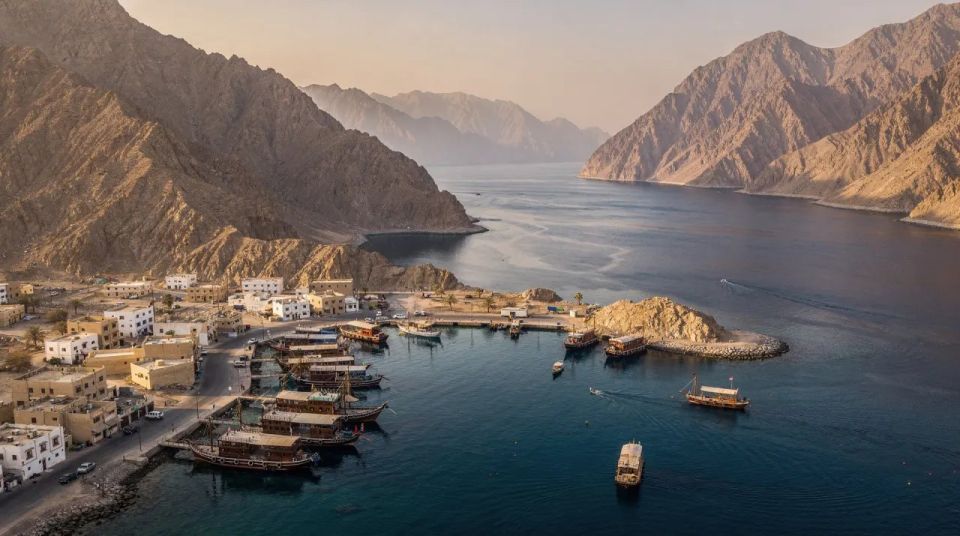
For owners based in the Gulf, the most remarkable cruising ground is also one of the closest. Musandam, an exclave of Oman separated from the rest of the country by the UAE, forms the southern shore of the Strait of Hormuz. Its limestone mountains fall directly into the sea, cut by inlets that are often compared with the fjords of Norway.
Khor Sham
The largest inlet, Khor Sham, runs some 16 kilometres inland and is barely a kilometre wide in places, with walls rising sheer from the water. The water is usually calm and clear. Inside lies Telegraph Island, site of a British telegraph relay station built in the 1860s for the undersea cable to India, and today a quiet place to swim and snorkel.
Villages by sea
Several of the peninsula's villages can be reached only by boat. Kumzar, at the northern tip, has its own language, Kumzari, which draws on Arabic, Persian and other tongues. Dolphins are common in the inlets.
Why it suits a private yacht
Musandam offers a sense of remoteness that is rare so close to Dubai, Abu Dhabi and Doha. Between October and April the weather is mild and the water warm, at a time when the Mediterranean season has closed. For GCC families it allows a few days of complete privacy without a long passage or a flight.
Practical notes
- Khasab is the main town and the place for formalities. A yacht entering Omani waters must clear in and out, and an agent is advisable; requirements should be confirmed well before departure.
- Guests travelling overland from the UAE need the right entry permission for both countries.
- Summer brings high temperatures and stronger winds; the cruising season runs from autumn to spring.
- The Strait of Hormuz is one of the world's busiest shipping lanes. Passage planning, communications and security arrangements should reflect that.
General information for planning only. Entry requirements and conditions must be confirmed with the authorities and the yacht's agent.